Solar Installation in Gujranwala: 2026 Power Guide
Gujranwala runs on industry, and industry runs on electricity that keeps getting pricier. For the city’s factories, workshops, and growing homes, a smart solar installation in Gujranwala is now the clearest route to stable, affordable power in 2026. This guide focuses on the realities unique to this industrial hub: heavy daytime loads, voltage swings, and the economics of generating your own energy.
Known as the City of Wrestlers and a manufacturing powerhouse, Gujranwala sees intense daytime electricity demand. That demand profile makes rooftop solar unusually effective, because production peaks exactly when machines and cooling run hardest.
Why Gujranwala’s Industrial Load Suits Solar
Businesses here consume most of their power between sunrise and sunset. Solar generation naturally aligns with that curve, so a high share of output is used on site instead of exported.
High self-consumption shortens payback dramatically. For manufacturers paying commercial tariffs, a well-sized array often recovers its cost in under four years.
- Daytime production matches factory and workshop operating hours.
- Reduced reliance on costly diesel generators during load-shedding.
- Predictable energy costs that protect profit margins.
- A credible sustainability story for export-focused buyers.
Handling Voltage Fluctuation and Heavy Machinery
Industrial feeders in Gujranwala often suffer voltage dips and surges. A quality inverter with wide input tolerance protects both the solar system and sensitive equipment.
Motor-driven loads also create inrush currents at startup. Correct inverter sizing and soft-start compatibility prevent nuisance trips and keep production uninterrupted.
Design Choices That Matter Here
- Three-phase hybrid inverters for balanced industrial supply.
- Surge protection and robust earthing against grid instability.
- Oversized cabling to cut losses over longer rooftop runs.
How Much Does a Solar Installation in Gujranwala Cost?
Pricing scales with capacity and whether storage is added. The table reflects typical turnkey ranges for on-grid systems in 2026.
| System Size | Best For | Daily Units | Indicative Cost (PKR) |
|---|---|---|---|
| 10 kW | Large home / small shop | 44–52 | 1,700,000–2,100,000 |
| 25 kW | Workshop / SME | 110–130 | 4,200,000–5,200,000 |
| 50 kW | Factory unit | 220–260 | 8,000,000–9,800,000 |
Larger commercial systems achieve better per-kilowatt pricing. Economies of scale and higher self-consumption make them especially attractive for industrial owners.
Net Metering and Compliance
Net metering lets you export surplus units to GEPCO and draw them back when production dips. For most grid-tied sites, it is the single biggest driver of savings.
Renewable targets are set nationally, and you can review the government’s clean-energy direction through the Alternative Energy Development Board before planning a large install. A capable installer manages the GEPCO paperwork for you.
- Match the sanctioned load to the proposed inverter capacity.
- Fit a bidirectional meter and compliant inverter.
- Submit the net-metering application to GEPCO.
- Start banking surplus once the agreement is approved.
Choosing the Right Installation Partner
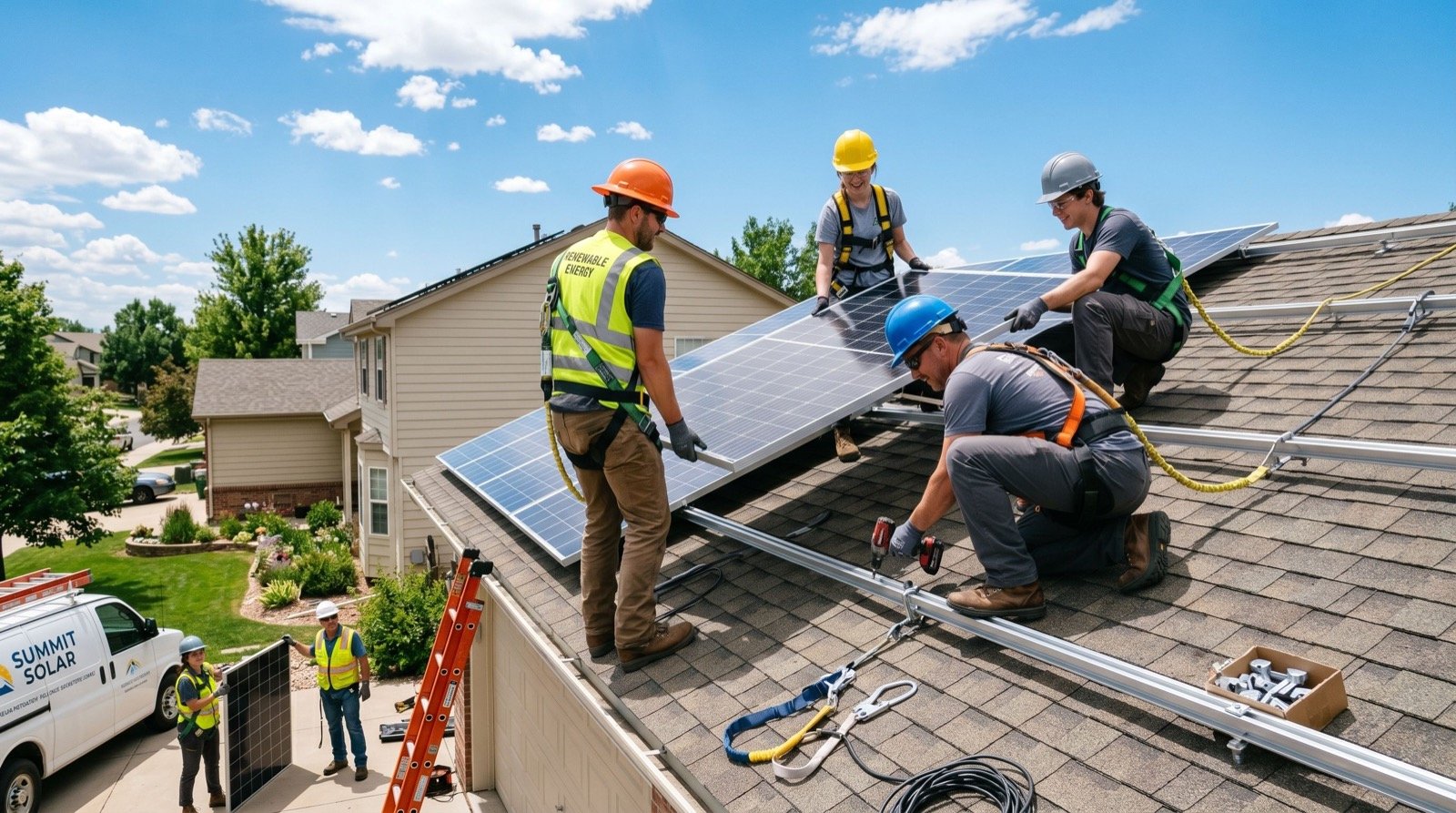
Industrial rooftops demand serious engineering, not a residential kit scaled up. Structural loading, cable management, and safety all require experienced hands.
Select trusted professionals who provide a structural assessment, a single-line diagram, and documented commissioning. These deliverables separate durable systems from risky shortcuts.
If you also operate in the south, the same standards apply. A reputable solar company in Karachi will design for coastal humidity and salt exposure, proving that local conditions always shape good engineering.
Maintenance for Industrial Rooftops
Dust, smoke, and airborne particulates from nearby industry settle on panels and cut yield. Regular cleaning keeps production near design levels.
- Schedule professional cleaning every three to four weeks in dry season.
- Monitor each string through the inverter dashboard for early faults.
- Inspect mounting hardware and connectors annually.
Cutting Diesel Costs for Gujranwala Manufacturers
Many workshops here still lean on diesel generators to ride out load-shedding, and that fuel bill erodes margins every month. Solar paired with a hybrid inverter slashes generator run-time by covering daytime loads directly.
For a mid-size unit, replacing even a few generator hours a day adds up to large annual savings. The array works silently, needs no refuelling, and produces most when the factory floor is busiest.
A battery buffer can bridge brief outages without starting the generator at all. That combination keeps sensitive processes running and protects product quality during unstable supply.
- Reduce diesel consumption and maintenance on ageing generators.
- Keep critical machinery online through short outages.
- Strengthen sustainability credentials for export buyers.
Sizing Around Your Production Schedule
The right system follows your shift pattern, not a generic template. A single-shift workshop maximises value from a daytime-heavy design, while double shifts justify adding storage.
Start with twelve months of electricity bills to map real consumption. An experienced installer overlays your load curve against expected solar output to find the most profitable size.
Leaving modest headroom is wise, because growing units add machines quickly. An array sized only for today often needs an awkward expansion within a couple of years.
Roof condition matters too, since industrial sheds vary widely in strength. A structural check confirms the roof can carry the mounting load safely before any panels go up, avoiding costly reinforcement surprises mid-project.
Think about future electrification as well. Electric forklifts, extra cooling, and EV charging all raise demand, so planning conduit and inverter capacity now saves money when those loads arrive.
Frequently Asked Questions
Is a solar installation in Gujranwala worth it for a factory?
Yes. High daytime loads and commercial tariffs mean factories often achieve payback in under four years in 2026, after which generation sharply reduces operating costs.
Can solar protect my machines from voltage problems?
A properly specified hybrid inverter with surge protection and wide input tolerance helps stabilise supply and shields sensitive equipment from common grid swings.
Do I need three-phase equipment?
Most industrial and larger commercial sites use three-phase power, so a three-phase inverter is essential for balanced, efficient operation.
What roof area does a 50 kW system need?
Plan for roughly 2,200–2,700 square feet of unshaded roof using modern high-wattage panels. A structural and shade survey confirms the exact layout.
Final Thoughts
For an industrial city, a well-engineered solar installation in Gujranwala is less a luxury and more a competitive necessity in 2026. Align the system with your daytime load, specify equipment that tolerates grid instability, and secure net metering, and the array will protect your margins for decades. Request a full site survey and two detailed written quotes before you commit.